Accounting outsourcing for growing businesses becomes critical as financial operations grow more complex than anticipated. As companies scale, transaction volumes increase, compliance requirements tighten, and leadership expectations from the finance function shift from basic reporting to strategic insight.
Yet many growing businesses continue to rely on accounting structures designed for an earlier stage of growth. This mismatch between business scale and finance capability creates a critical challenge: lack of timely, accurate, and reliable financial information.
This remains the most common accounting challenge faced by growing businesses today.
What Is the Single Biggest Accounting Problem in Scaling Businesses?
The core issue is fragmented and overstretched accounting processes.
In many scaling companies, in-house accounting teams are expected to manage bookkeeping, reconciliations, GST compliance, MIS reporting, audits, and evolving regulatory requirements simultaneously. As responsibilities expand, accounting processes become reactive rather than structured.
This often leads to:
Delayed month-end closures
Inconsistent or unreliable MIS reporting
Manual reconciliations accumulating over time
Compliance becoming deadline-driven rather than controlled
Business decisions being made using outdated financial data
As a result, leadership loses financial visibility, and finance teams remain trapped in execution mode instead of supporting financial control and decision-making.
Why Doesn’t Hiring More Staff Fully Solve the Accounting Problem?
Hiring additional resources may appear to be the obvious fix, but it rarely addresses the root cause of accounting challenges in scaling businesses.
Adding headcount increases fixed costs and dependency on individuals. Without standardized workflows, documented procedures, review mechanisms, and clear ownership, the same inefficiencies continue at a larger scale. Knowledge remains person-dependent, and continuity becomes a risk when team members change.
The real challenge is not capacity alone. It is the absence of process-led accounting systems and financial governance.
How Does Accounting Outsourcing Solve This Problem?
Accounting outsourcing for growing companies works when it shifts the focus from individuals to structured, process-driven financial management.
Instead of accounting tasks being handled in isolation, outsourced accounting services integrate bookkeeping, reconciliations, compliance, and MIS reporting into a single operating framework. Each activity follows defined timelines, documented controls, and review checkpoints.
This approach directly addresses fragmented financial management and significantly reduces errors, delays, and compliance risks.
What Changes When Accounting Is Managed Through Outsourcing?
When accounting process outsourcing is implemented correctly, several outcomes consistently emerge.
Improved Accuracy Across Financial Operations
Transactions are recorded consistently, reconciliations are performed regularly, and discrepancies are identified early. This prevents audit stress and year-end surprises.
Compliance Becomes Routine, Not Reactive
GST compliance, statutory filings, and reconciliations are embedded into monthly accounting processes. Compliance shifts from last-minute execution to ongoing financial control.
Decision-Ready MIS Reporting
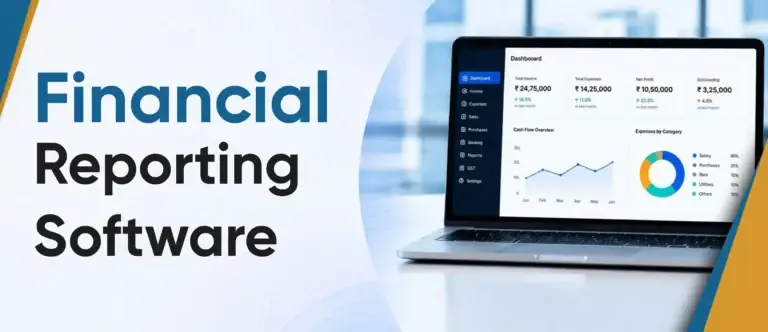
MIS reports are generated on time and reflect actual business performance. Leadership gains clarity on cash flows, margins, and financial risks, enabling informed decisions.
Reduced Dependency on Individuals
Accounting processes remain consistent regardless of personnel changes, ensuring stability and continuity.
Scalable Accounting Without Disruption
Outsourced accounting models scale seamlessly as transaction volumes and regulatory complexity increase, without frequent internal restructuring.
Does Accounting Outsourcing Reduce Management Control?
A common misconception is that outsourcing accounting functions reduces management control. In practice, the opposite is true.
With defined reporting structures, documented processes, and regular reviews, management gains greater transparency and financial visibility than with informal in-house setups. Strategic decision-making remains internal, while execution follows a disciplined framework.
Accounting outsourcing strengthens governance by introducing accountability, clarity, and measurable financial outcomes.
When Is Accounting Outsourcing the Right Choice?
Outsourced accounting services deliver the most value when:
Transaction volumes are increasing
Compliance scrutiny is rising
MIS accuracy is critical for leadership decisions
Internal accounting teams are stretched across competing priorities
The objective is not to replace finance teams, but to enable them to focus on oversight, analysis, and strategy rather than routine accounting execution.
How a Structured Outsourcing Model Creates Long-Term Financial Stability
A well-managed accounting outsourcing model creates consistency, continuity, and scalable financial control. Processes do not change with people, and financial discipline strengthens as the business grows.
When accounting systems are structured and controlled, finance stops being a bottleneck and becomes a growth enabler.
That is the real value of accounting outsourcing for growing businesses: building a reliable financial foundation that supports sustainable, informed business decisions.

Haaren C Sanghvi
Founder & CEO, HSAG
Haaren C Sanghvi is the Founder & CEO of HSAG, with extensive expertise in risk management, taxation, audit, financial consultancy, business advisory, compliance and business outsourcing.
in Connect on LinkedIn